
The Holiday Season and Staying Sober
For those in early recovery, and for some in long term recovery, the holiday season can be a very precarious time. Alcohol is prevalent almost everywhere. For those who do not suffer from addiction, having a few drinks with friends every day or two, whether in their homes, at bars, restaurants, or holiday parties, is a common practice. This can create a tremendous amount of anxiety, especially for those in early recovery.
A person in early recovery is quite frequently very fragile emotionally. The very substance or substances they have used to cope with life have been removed. They are learning a new way that is drug-free. For many, the world is a scary place as pro-longed substance abuse has dulled any coping skills they may have had. Simply having a discussion with another person can be very difficult. Going to public places or being in crowds can be very difficult.
Sober Holiday Tips
Click to View our Infographic
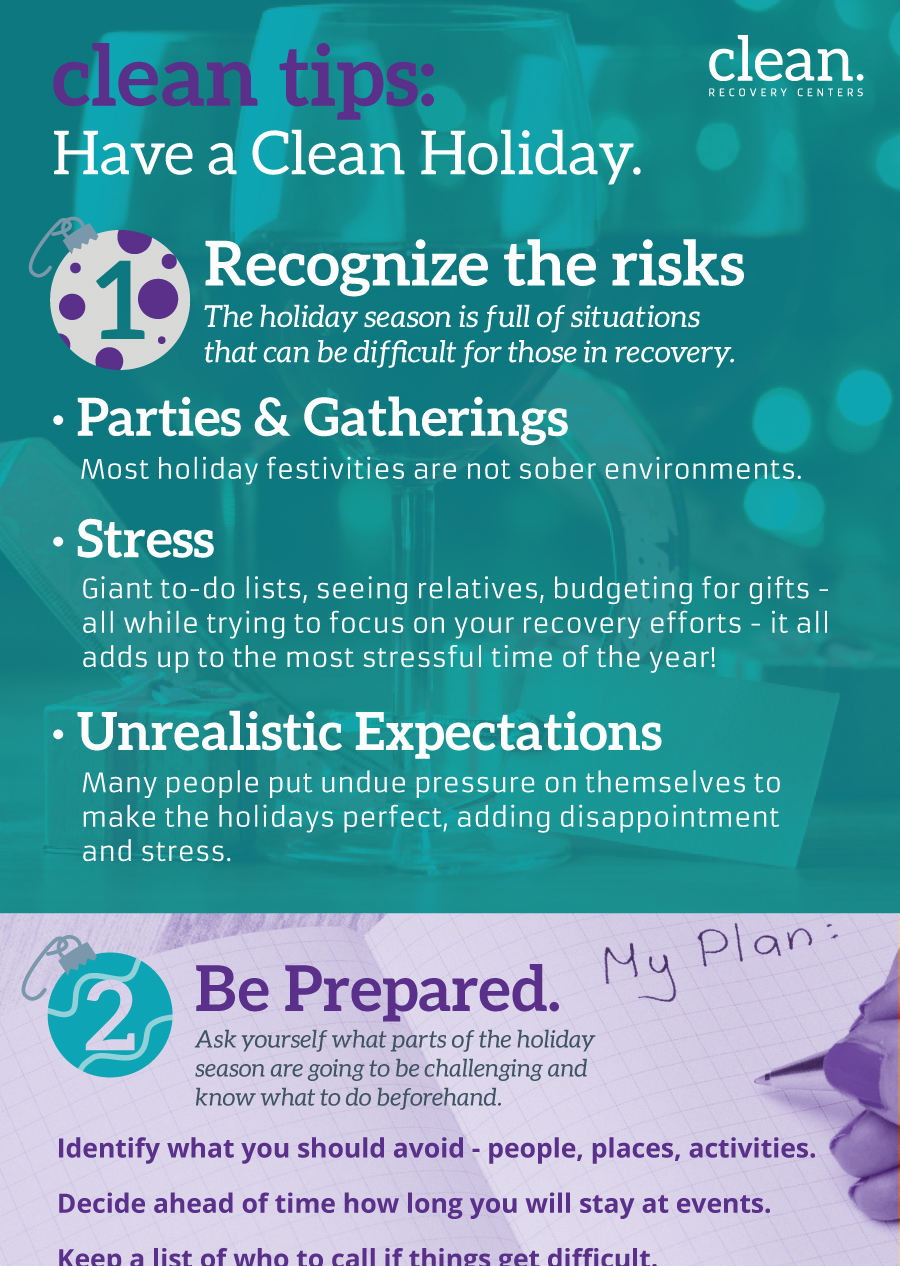
Active addiction scrambles brain chemistry in a major way and it takes time to for those brain chemicals to return to normal levels. Many of those in early recovery also suffering from underlying conditions such as depression. Given all of these factors, it is not surprising that such a person may feel even more uncomfortable during the holiday season and all the temptations that abound.
The good news is that there are many effective ways to not only stay sober during the holiday season but also perhaps even enjoy this festive time of year. For most in early recovery, it is very important that they find environments where temptations are minimal. Environments where they can feel safe and surrounded by supportive people familiar with what they are going through.
The vast majority of recovery groups such as AA and the multitude of other 12 step groups, Celebrate Recovery, and various other addiction recovery entities have a great many activities scheduled throughout the 2 to 3 week period of time before Christmas and though New Year’s. There are 24 hour meetings, numerous lunches and dinners planned, and other sober activities.
For most in early recovery, attending these sober activities throughout the holiday season helps them tremendously. A good number of people actually plan out their 12 step meetings and the events/activities they are going to attend for the entire holiday period. This is a good practice as those recovery, and early recovery in particular, tend to need structure. Structuring a schedule of such activities gives the person an opportunity to feel some certainty and comfort. They feel a certain confidence and sense of safety knowing that their lives during the holiday season are going to be full of healthy, recovery related meetings, etc.
These recovery meetings and events during the holiday season are full of people in short, mid-term, and long-term recovery. These people have all felt very similarly at one point or another during tempting holiday seasons. They can relate to one another. They can share with one another. And they can be supportive of one another. For the most part, these “sober events” are full of laughter and conviviality.
In short, not only is maintaining sobriety in early recovery during the holiday season possible, but it is also often enjoyable. Having a schedule of events and planned sober activities can help a lot. A person in early recovery can stay sober, enjoy the holiday season, and feel the added confidence of having made it through the holiday season sober. For many, this will be the first time in a long time that they have experienced a holiday season sober and that is a blessing.
